
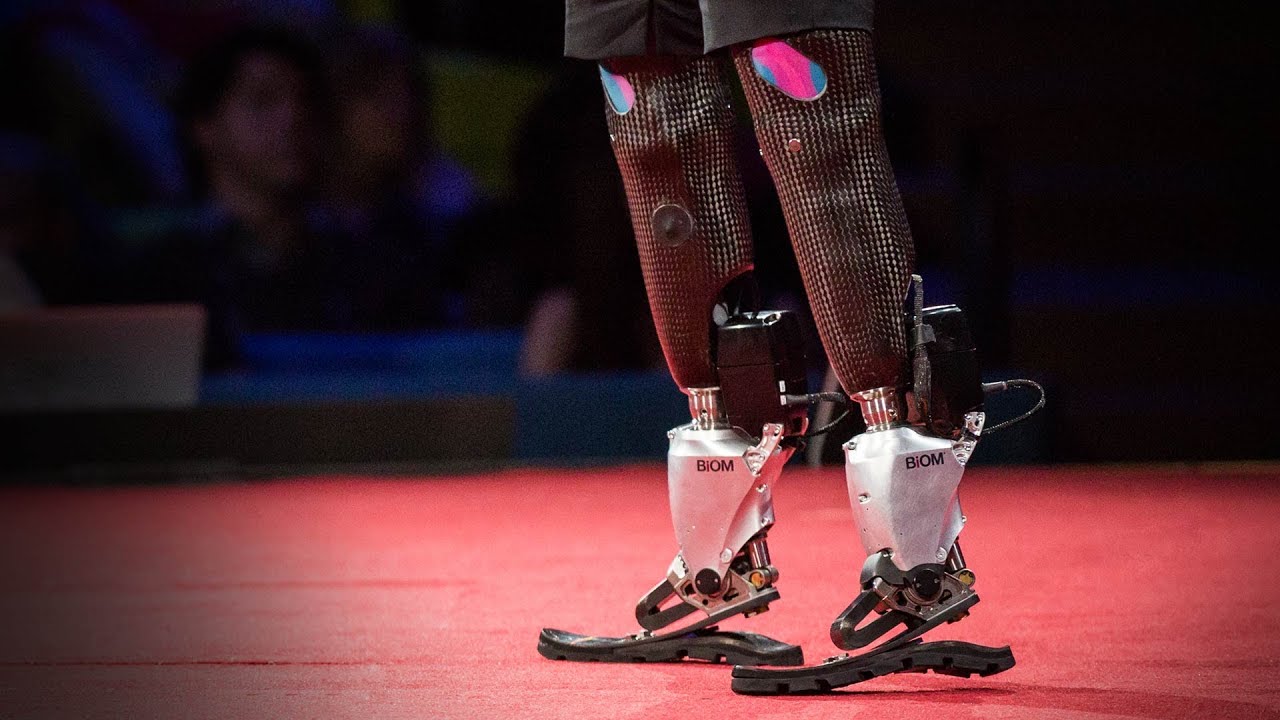
The age of bioengineering is upon us, with scientists' understanding of how to engineer cells, tissues and organs improving at a rapid pace. Here, how this could affect the future of our physical bodies.
آپ کو یہ بھی پسند آ سکتا ہے
How to become your best adult self
How to master life transitions
10 ideas changing the world in 2026
Nature
Reclaim the past, save the future
What to know about cybercrime
10 Bold Ideas Driving a Sustainable Future, Curated With Acura
Harnessing the power of bacteria for good
What death can teach you about life
How to College
Talks to watch for World Population Day
The road to peace
New thoughts on addiction
Big ideas for our roadways
Indigenous voices
Recess
TED Talks to surprise and delight
Novel ways of thinking about epidemics
Comedic Relief
What's the big deal about Mars?
2020 TED Countdown Global Launch
Primary 1 English
CocoMelon | Little Baby Bum | Blippi - Nursery Rhymes & Kids TV Shows
CoComelon - Happy Holidays
تبصرے
10 تبصرے
Dan Reisel studies the biology of change, including our ability to rewire our own brains. And he asks a big question: Instead of warehousing these criminals, shouldn't we be using what we know about the brain to help them rehabilitate? Put another way: If the brain can grow new neural pathways after an injury ... could we help the brain re-grow morality? TEDTalks is a daily video podcast of the best talks and performances from the TED Conference, where the world's leading thinkers and doers give the talk of their lives in 18 minutes (or less). Look for talks on Technology, Entertainment and Design -- plus science, business, global issues, the arts and much more. Find closed captions and translated subtitles in many languages at http://www.ted.com/translate Follow TED news on Twitter: http://www.twitter.com/tednews Like TED on Facebook: https://www.facebook.com/TED Subscribe to our channel: http://www.youtube.com/user/TEDtalksDirector
Dan Reisel studies the biology of change, including our ability to rewire our own brains. And he asks a big question: Instead of warehousing these criminals, shouldn't we be using what we know about the brain to help them rehabilitate? Put another way: If the brain can grow new neural pathways after an injury ... could we help the brain re-grow morality? TEDTalks is a daily video podcast of the best talks and performances from the TED Conference, where the world's leading thinkers and doers give the talk of their lives in 18 minutes (or less). Look for talks on Technology, Entertainment and Design -- plus science, business, global issues, the arts and much more. Find closed captions and translated subtitles in many languages at http://www.ted.com/translate Follow TED news on Twitter: http://www.twitter.com/tednews Like TED on Facebook: https://www.facebook.com/TED Subscribe to our channel: http://www.youtube.com/user/TEDtalksDirector
Dan Reisel studies the biology of change, including our ability to rewire our own brains. And he asks a big question: Instead of warehousing these criminals, shouldn't we be using what we know about the brain to help them rehabilitate? Put another way: If the brain can grow new neural pathways after an injury ... could we help the brain re-grow morality? TEDTalks is a daily video podcast of the best talks and performances from the TED Conference, where the world's leading thinkers and doers give the talk of their lives in 18 minutes (or less). Look for talks on Technology, Entertainment and Design -- plus science, business, global issues, the arts and much more. Find closed captions and translated subtitles in many languages at http://www.ted.com/translate Follow TED news on Twitter: http://www.twitter.com/tednews Like TED on Facebook: https://www.facebook.com/TED Subscribe to our channel: http://www.youtube.com/user/TEDtalksDirector
Bioethicist Paul Root Wolpe describes an astonishing series of recent bio-engineering experiments, from glowing dogs to mice that grow human ears. He asks: Isn't it time to set some ground rules? (Filmed at TEDxPeachtree.) Talk by Paul Root Wolpe.
Bioethicist Paul Root Wolpe describes an astonishing series of recent bio-engineering experiments, from glowing dogs to mice that grow human ears. He asks: Isn't it time to set some ground rules? (Filmed at TEDxPeachtree.) Talk by Paul Root Wolpe.
Bioethicist Paul Root Wolpe describes an astonishing series of recent bio-engineering experiments, from glowing dogs to mice that grow human ears. He asks: Isn't it time to set some ground rules? (Filmed at TEDxPeachtree.) Talk by Paul Root Wolpe.
What does it take to regrow bone in mass quantities? Typical bone regeneration — wherein bone is taken from a patient's hip and grafted onto damaged bone elsewhere in the body — is limited and can cause great pain just a few years after operation. In an informative talk, Molly Stevens introduces a new stem cell application that harnesses bone's innate ability to regenerate and produces vast quantities of bone tissue painlessly. TEDTalks is a daily video podcast of the best talks and performances from the TED Conference, where the world's leading thinkers and doers give the talk of their lives in 18 minutes (or less). Look for talks on Technology, Entertainment and Design -- plus science, business, global issues, the arts and much more. Find closed captions and translated subtitles in many languages at http://www.ted.com/translate Follow TED news on Twitter: http://www.twitter.com/tednews Like TED on Facebook: https://www.facebook.com/TED Subscribe to our channel: http://www.youtube.
What does it take to regrow bone in mass quantities? Typical bone regeneration — wherein bone is taken from a patient's hip and grafted onto damaged bone elsewhere in the body — is limited and can cause great pain just a few years after operation. In an informative talk, Molly Stevens introduces a new stem cell application that harnesses bone's innate ability to regenerate and produces vast quantities of bone tissue painlessly. TEDTalks is a daily video podcast of the best talks and performances from the TED Conference, where the world's leading thinkers and doers give the talk of their lives in 18 minutes (or less). Look for talks on Technology, Entertainment and Design -- plus science, business, global issues, the arts and much more. Find closed captions and translated subtitles in many languages at http://www.ted.com/translate Follow TED news on Twitter: http://www.twitter.com/tednews Like TED on Facebook: https://www.facebook.com/TED Subscribe to our channel: http://www.youtube.
http://www.ted.com Surgeon Anthony Atala demonstrates an early-stage experiment that could someday solve the organ-donor problem: a 3D printer that uses living cells to output a transplantable kidney. Using similar technology, Dr. Atala's young patient Luke Massella received an engineered bladder 10 years ago; we meet him onstage. TEDTalks is a daily video podcast of the best talks and performances from the TED Conference, where the world's leading thinkers and doers give the talk of their lives in 18 minutes. TED stands for Technology, Entertainment, Design, and TEDTalks cover these topics as well as science, business, development and the arts. Closed captions and translated subtitles in a variety of languages are now available on TED.com, at http://www.ted.com/translate.
http://www.ted.com Surgeon Anthony Atala demonstrates an early-stage experiment that could someday solve the organ-donor problem: a 3D printer that uses living cells to output a transplantable kidney. Using similar technology, Dr. Atala's young patient Luke Massella received an engineered bladder 10 years ago; we meet him onstage. TEDTalks is a daily video podcast of the best talks and performances from the TED Conference, where the world's leading thinkers and doers give the talk of their lives in 18 minutes. TED stands for Technology, Entertainment, Design, and TEDTalks cover these topics as well as science, business, development and the arts. Closed captions and translated subtitles in a variety of languages are now available on TED.com, at http://www.ted.com/translate.