
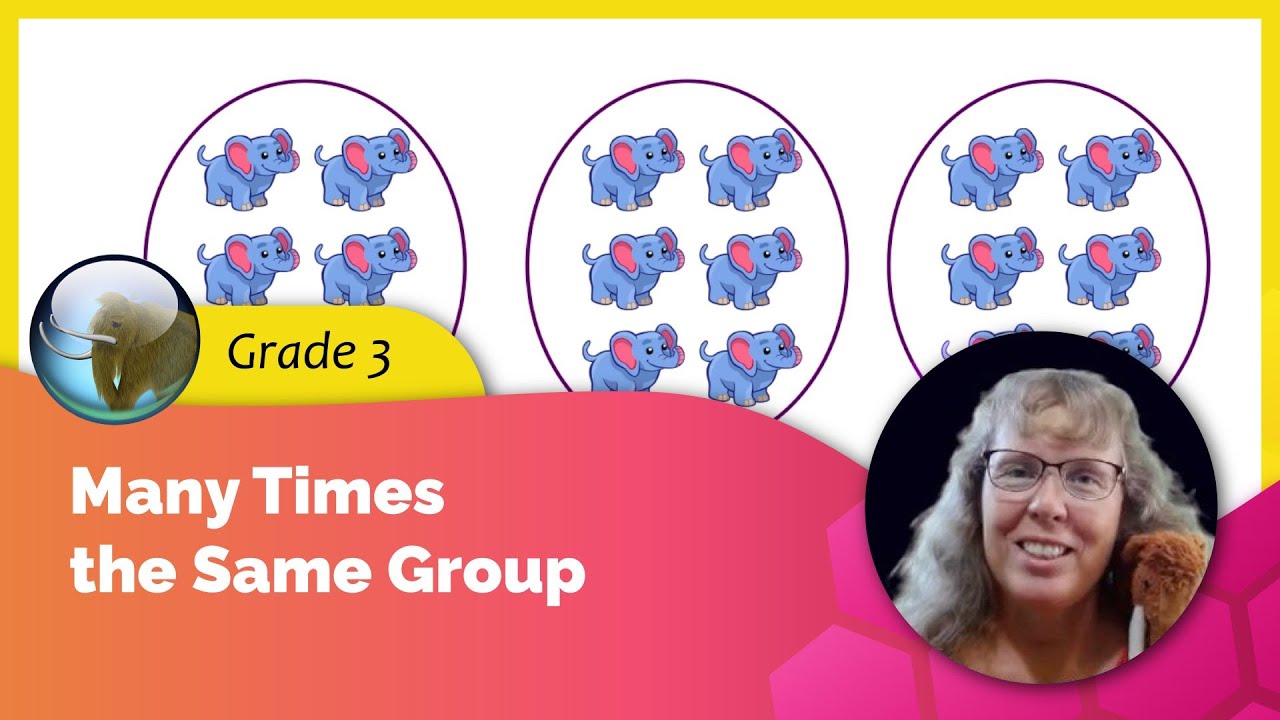
This is the very first lesson in learning the concept of multiplication. When we have groups of the same size, we can write a multiplication. For example, 3 x 6 refers to three groups of six. Find more 3rd grade math videos Math Mammoth 3rd grade curriculum
آپ کو یہ بھی پسند آ سکتا ہے
Year 7 Math
Numberblocks - Learn to Count | Maths for Kids
Numberblocks - MI15 Fact Files
Pry 4 Primary Mathematics
Pry 6 Primary Mathematics
JSS2 Mathematics
All CBC Grade 4 Math Lessons | EasyElimu
MATH 7 QUARTER 1 | GRADE 7 1st QUARTER LESSONS | MATATAG CURRICULUM MATHEMATICS TAGALOG TUTORIAL FIRST QUARTER
Trigonometry grade 11
Singapore Math P1 (Grade 1) Teaching Videos by Teachers
Grade 6 Math
পঞ্চম শ্রেণির গণিত || Class Five Math
Intermediate Maths Part 1
XII MATHS CHAPTER # 07: "CIRCLE"
رياضيات الرابع العلمي كامل / مؤمل مهدي / المنهج الجديد
Teorema de Rolle ejercicios resueltos
Class 9 Math - Punjab Board ( New Book 2026 ) - PCTB
POTENCIAS TRUCOS , propiedades ejercicios resueltos
Kids Songs by CoComelon
Primary 1 English
CoComelon
Alphabet (ABC) Songs by CoComelon
CocoMelon | Little Baby Bum | Blippi - Nursery Rhymes & Kids TV Shows
CoComelon - Happy Holidays
تبصرے
10 تبصرے
In this lesson we study the order of operations - but only with a limited set of operations. The math problems (expressions) in the lesson may include parenthesis, multiplication, addition & subtraction, but no division or other operations. This is because students are studying this after they have learned multiplication, but not yet division, in 3rd grade. The reason I like teaching the order of operations in the early grades is so that students get exposed AND get to practice WRITING expressions (we call them "math sentences") with several operations - and thus they get used to problems the involve more than one operation. Too many times, math books focus on word problems and questions with only one operation, in grades 1-3. As a result, children often don't learn to solve word problems that require more than one operation.
In this lesson we study the order of operations - but only with a limited set of operations. The math problems (expressions) in the lesson may include parenthesis, multiplication, addition & subtraction, but no division or other operations. This is because students are studying this after they have learned multiplication, but not yet division, in 3rd grade. The reason I like teaching the order of operations in the early grades is so that students get exposed AND get to practice WRITING expressions (we call them "math sentences") with several operations - and thus they get used to problems the involve more than one operation. Too many times, math books focus on word problems and questions with only one operation, in grades 1-3. As a result, children often don't learn to solve word problems that require more than one operation.
When we arrange things neatly in rows and columns, it's super easy to see that we can group them in two different ways, and get the SAME answer. In other words, we can multiply in two different "ways", or in either order, but the answer is the same: multiplication is commutative. This also affects how you THINK about multiplication problems. Which is easier (if you're solving it by repeated addition): 4 x 10 or 10 x 4? Clearly to think of it as four groups of 10 is easier (quicker to add).
When we arrange things neatly in rows and columns, it's super easy to see that we can group them in two different ways, and get the SAME answer. In other words, we can multiply in two different "ways", or in either order, but the answer is the same: multiplication is commutative. This also affects how you THINK about multiplication problems. Which is easier (if you're solving it by repeated addition): 4 x 10 or 10 x 4? Clearly to think of it as four groups of 10 is easier (quicker to add).
We continue looking at simple situations where multiplication is useful, such as the total cost of so many items, or a group of objects arranged in an array. Sometimes the question is not given but we need to figure out WHAT could be solved or found out. Sometimes what the question is asking is NOT the total but one of the factors. This helps children become better problem solvers, because they cannot rely on mechanically multiplying the two numbers given in the problem. See more 3rd grade math videos at
We continue looking at simple situations where multiplication is useful, such as the total cost of so many items, or a group of objects arranged in an array. Sometimes the question is not given but we need to figure out WHAT could be solved or found out. Sometimes what the question is asking is NOT the total but one of the factors. This helps children become better problem solvers, because they cannot rely on mechanically multiplying the two numbers given in the problem. See more 3rd grade math videos at
We focus on how zero works in multiplication. For example, 4 x 0 means four groups of zero... which totals nothing, a big fat zero! The same happens with 0 x 9, or zero groups of 9. We review how 1 works, also. Mathy my mascot would rather study number 9 though, so he has to insert a problem... can you solve 9 x 9? :) More third grade math videos: Math Mammoth Grade 3 curriculum: Interactive multiplication chart - fully customizable for students to fill in partially or completely:
We focus on how zero works in multiplication. For example, 4 x 0 means four groups of zero... which totals nothing, a big fat zero! The same happens with 0 x 9, or zero groups of 9. We review how 1 works, also. Mathy my mascot would rather study number 9 though, so he has to insert a problem... can you solve 9 x 9? :) More third grade math videos: Math Mammoth Grade 3 curriculum: Interactive multiplication chart - fully customizable for students to fill in partially or completely:
We look at several simple word problems that involve MULTIPLICATION. Often, the word "each" implies we need to use multiplication. Some of the word problems involve addition, too, so don't get fooled! This video is meant for 2nd or 3rd grade - for children who are just beginning to understand and study multiplication. Find more 3rd grade math videos at
We look at several simple word problems that involve MULTIPLICATION. Often, the word "each" implies we need to use multiplication. Some of the word problems involve addition, too, so don't get fooled! This video is meant for 2nd or 3rd grade - for children who are just beginning to understand and study multiplication. Find more 3rd grade math videos at