
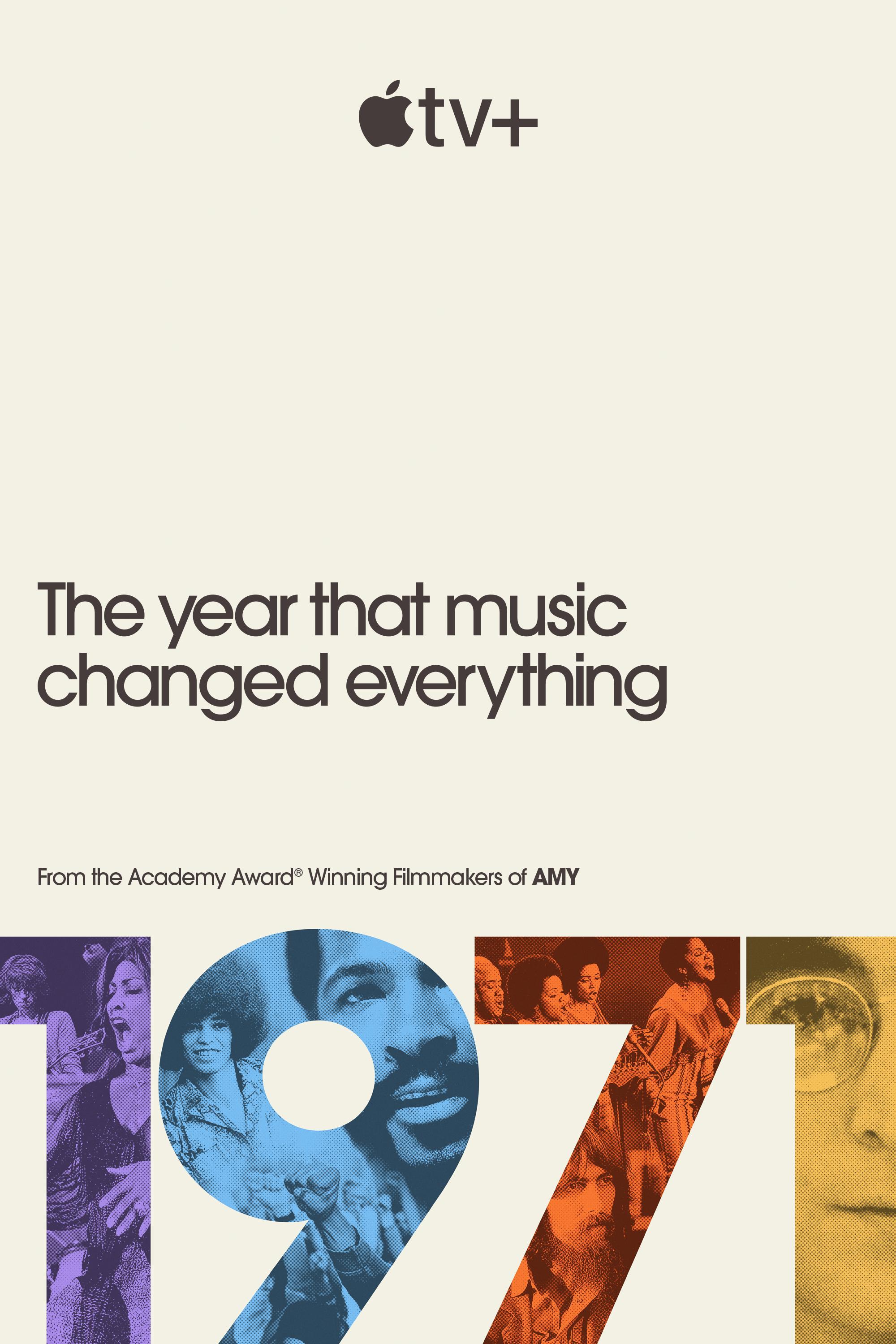
The musicians and soundtracks that shaped the culture and politics of 1971.
ٹریلر
کاسٹ
Asif Kapadia
Director
James Rogan
Director
Danielle Peck
Director
Mick Jagger
Self
Dick Cavett
Self
John Lennon
Self
Casey Kasem
Self
Graham Nash
Self - Crosby, Stills, Nash & Young
David Bowie
Self
Elton John
Self
Keith Richards
Self
Yoko Ono
Self
Alice Cooper
Self
Muhammad Ali
Self
The Rolling Stones
Themselves
Jim Morrison
Self
Walter Cronkite
Self
Geraldo Rivera
Self
Sly Stone
Self
Pete Townshend
Self
Richard Nixon
Self
David Hepworth
Writer
آپ کو یہ بھی پسند آ سکتا ہے
1971: The Year That Music Changed Everything
Alexander: The Making of a God
Vikings: The Rise and Fall
Queen Cleopatra
World War II: From the Frontlines
Once Upon a Time in Iraq
D-Day: The Unheard Tapes
Turning Point: The Vietnam War
The Great War
No Escape
The Day of the Jackal
The Last Kingdom
The Sandman
The War Between the Land and the Sea
Top Boy
Gangs of London
MobLand
Super League: The War for Football
The Secret Lives of Animals
The Line
McCartney 3,2,1
WWII in Color: Road to Victory
Hip Hop Was Born Here
World War II with Tom Hanks
تبصرے
10 تبصرے
The music of 1971 was excellent, but you wouldn't know it from watching this boring waste of time. The music of that year changed nothing politically in the United States. The documentary goes on too much about the Vietnam war and isn't a documentary about the creation of the music. There were so many excellent songs that year that had great influences on young people, and most of those songs were not politically motivated. Nixon was re-elected in 1972 even after the Pentagon Papers were released in the New York Times and Washington Post which alerted Americans that U. S. presidents knew all along the war in Vietnam was a waste of time and lives, a war they could not win. Nixon also won that election in '72 in a landslide after the first rumblings of the Democratic Headquarters at the Watergate hotel being broken into. So the music didn't change anything there. The only reason Nixon resigned as president in 1974 and American troops stopped being sent to Vietnam is because Nixon's legal counsel John Dean was turning evidence against him in regards to the Watergate break in. Documentaries like this give a false impression to those who don't know anything or much of the era or that year. So don't fall for the title of this. If you're sincerely interested in the music of 1971, do yourself a favour and listen to a playlist of songs of 1971 on youtube and you'll see for yourself that 99% you'll never hear mentioned in this misleading racially motivated yawn festival.
It was never about music... Ok if it was the only issue, as most of it nowadays only one view of it all. Trash, wasted time. Couldn't pass the 3rd ep.
There is a lot to unpack here but upfront this is more of a social documentary than a music documentary, its very easy to see the no so subtle slants when Bill Ayers audio is being used to illustrate reasoning, Under the correct heading of "Social Documentary"at its best this series is very good at showing what was going with the youth in the US and England during these times and illustrates this very well. At its worst it tries to justify that radical left thinking is a morally higher ground and the right thing, all voices and sides should be heard and understood in a "Documentary" to allow the viewer to feel and think with their own mind. As a music documentary it has some good cut footage and at times lightly explores the subjects but veers off just as it starts to get going as a deeper dive into music.
1971 was indeed a fascinating and important year for music with many innovative and exciting recordings made. This show is not about that. It's yet another screed from old hippies about how much they hate Nixon and straight America with snippets of music in the background.
I usually really like shows/documentaries like this that show the music of specific periods in the 60's, 70's, and/or 80's. But this just dragged and dragged and dragged. Maybe they shouldn't have done 8 episodes, and cut it down to maybe four instead. I saw one commenter thought that this was too US-centric, but to me, as an American, I thought it dealt too much with obscure (at least to many Americans like myself) British issues. How much time was spent on Oz magazine being sued? Whatever for? I also thought way too much Bowie in this series, and not enough Who, and absolutely no mention of groups like Jethro Tull, ELP, Led Zeppelin, etc. And it's not like they didn't have enough time to include these people. The parts that interested me the most was watching how dynamic Tina Turner was during that era. I also liked the sections dealing with Carole King. But with eight episodes each clocking in for at least 45 minutes, that's not very much.
The concept is interesting, the music is great, but it feels like the creators had to deliver a certain number of episodes, so it became a free-for-all. They just can't seem to pick a lane. Let's do a documentary on Rolling Stones, let's do some historical context, let's do some social commentary, let's do one about black people. There's no natural flow or consistency there. It's not a coherent body of work consisting of 8 episodes, it's a collection of 8 episodes loosely held together by the fact that it's 1971. Some of them are great, some miss the mark so widely it's painful to watch. Admirable effort, mediocre result. Definitely better than nothing, but so much wasted potential.
This is a great documentary about the United States in the early 70s. And that's perfectly fine. But the title should be "1971: The year that music changed the US". Americans tend to look at themselves as the center of the world and fail to know or simply aren't interested in what happens outside the US. "What's going on?" Yeah, I wanna know too...do you?
1971: The Year That Music Changed Everything is a beautiful docuseries capturing the reality of a year that Baby Boomers and members of Generation X lived through. In this series, the blooming of unique soundtracks in a turbulent time is captured gracefully, using archival footage and interviews plus voiceovers from influential and iconic figures of the '70s. The eight-part docuseries focuses on the musicians and soundtracks that shaped the culture and politics of 1971; featured artists include The Rolling Stones, Aretha Franklin, Bob Marley, Marvin Gaye, The Who, Joni Mitchell, Lou Reed... and even Ravi Shankar. 1971: The Year That Music Changed Everything goes to great depth (each episode lasts from 40 to 60 minutes) to illustrate how these musical icons were influenced by the changing tides of history, including the Vietnam War, and how they used their work to inspire hope and change in their not-always-beautiful world. From politically-tinted songs to dreams of unity, the show runs the gamut of songs and emotions. It's truly a beautifully-executed series, though it tends to drag about three quarters of the way into each episode. The series comes from a filmmaking team that includes figures from documentaries like the Academy Award-winning 'Amy,' and so you know it's going to be an awesome piece of work. Asif Kapadia is the show's series director and serves as executive producer along with James Gay-Rees, David Joseph, and Universal Music Group's Adam Barker. And this undertaking truly is a team effort; the production team has meticulously picked snippets of interviews, radio broadcasts, film from the recording booth and performances, and more, all from 1971, and pieced them together to tell a beautiful, intricate story. As you watch more and more of the show, you begin to get sucked into the world that is being portrayed on screen, a surefire sign that the minds behind 1971: The Year That Music Changed Everything did lots of things right! Despite the show dragging a bit here and there, your eyes will surely be glued to the screen whenever you watch the series. 1971: The Year That Music Changed Everything is about resilience and inspiration, or rather inspiration through resilience. As these incredible musicians weathered the tempest that was the titular year, they funneled their energy toward releasing uplifting and rousing music that would echo with the general populace; they truly seized the opportunity. And I feel that it's a great parallel to 2020 and now 2021; certainly, music has played a major part in getting us through the pandemic, and who knows? Maybe 40 years down the road, we'll see a film about 2020: The Year That Music Changed Everything... Again. I give 1971: The Year That Music Changed Everything 4.5 out of 5 stars, and recommend it for ages 14 to 18, plus adults. 1971: The Year That Music Changed Everything releases May 21, 2021, on Apple TV+! Reviewed by Eshaan M., KIDS FIRST!
There was some great music in 1971. Unfortunately you hear very little of it in this documentary. Made by someone with a racial ax to grind. Disappointed.
Having been in my early teens that year, I was very interested in and agree 1971 was Rock music's greatest year. There was a lot of good music featured and a lot of good footage.. for me.... but for someone not my age I would think it would be kind of boring. In addition, they cover it w a weird post woke view of what actually (didn't ) happen. For example trying (desperately ) to show Yoko in a good light, w a voice overlay of Chrissy Hynde "hard chick of rock" gushing that "she was into the whole John and Yoko thing" WTF ? I lived thru it and NOBODY was into the "whole john and yoko thing". Even my Moms who was really old at the time, like 35 was appalled that John wasn't with someone "prettier"... Yep, we were superficial back then too. It was like Hynde was trying to throw a bone to the feminists after she T'd them off for saying she was passed around by bikers as a teen but it was her fault. They also over dramatize everything. Jim Morrison wasn't a violated artists poet who hated being a puppet ... He was the consummate rock star who was ill and couldn't work very well, he was an addict and when your drug of choice is alcohol it really shows. I think he liked being a rock star with the girls money and fame, but like all addicts it effects their work performance drastically when they get ill enough. The doc is good for people of a certain age who are able to tune out the agenda overlay. The Boomers were the last American generation raised with a chain of authority and thus the last likely to have the discipline to practice an instrument 12 hours a day and make great music. Kids today have been too coddled and just want to push electronic buttons and get famous, let the music be synthetic and their world be as well, and they will drown in the votes of pop. The boomers were more noble because of their childhoods, but they weren't as noble as the writers of this thing wish they had been, remember the Stones penned "Stupid Girl" a song likely banned by the woke crowd of today... Meet the new boss, same as the old boss.