
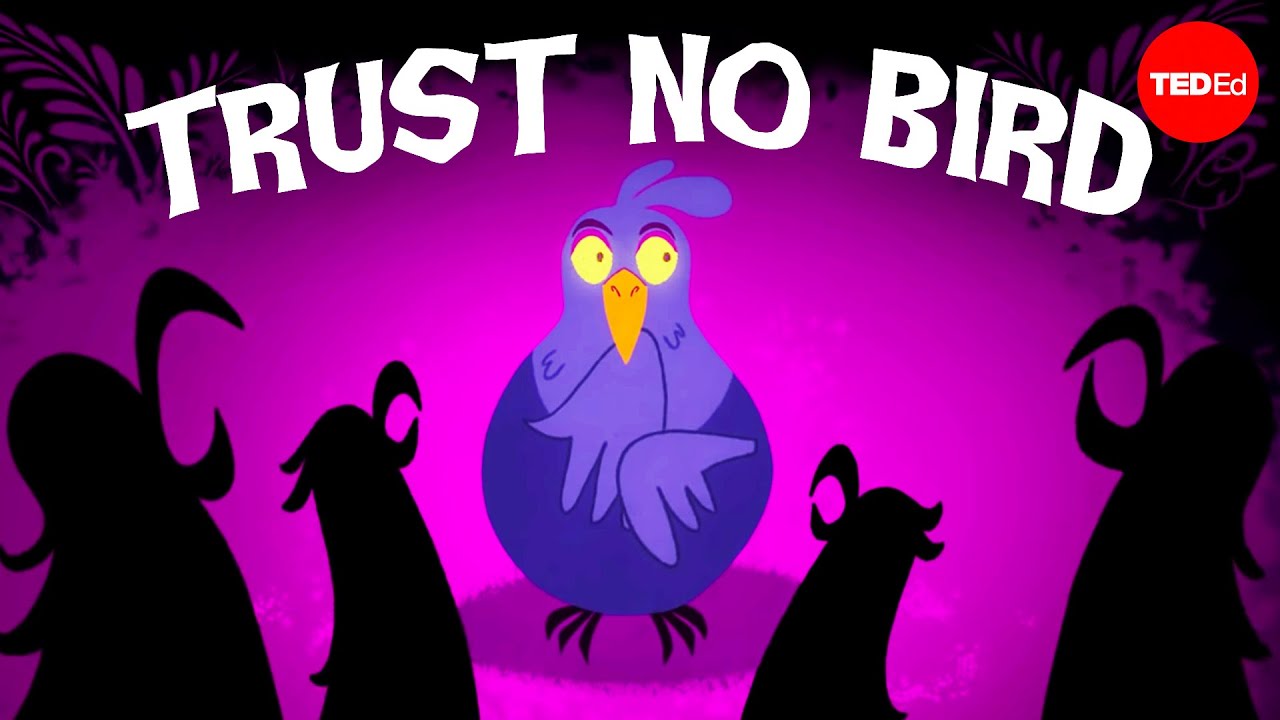
Dig into the evolutionary strategy of brood parasitism, where one animal tricks another into rearing its young. -- A mother honeyguide has placed its chick into a bee-eater’s nest— puncturing all the other eggs in the nest and leaving only its own hatching alive. Over the following weeks, the host parents devotedly care for the hatchling whose mother murdered their offspring. This is brood parasitism, a phenomenon which is especially well-known among birds. Steve Rothstein digs into the evolutionary strategy. Lesson by Steve Rothstein, directed by Mauricio Bueno, Lucy Animation Studio. Support Our Non-Profit Mission ---------------------------------------------- Support us on Patreon: Check out our merch: ---------------------------------------------- Connect With Us ---------------------------------------------- Sign up for our newsletter: Follow us on Facebook: Find us on Twitter: Peep us on Instagram: ---------------------------------------------- Keep Learning ---------------------------------------------- View full lesson: Dig deeper with additional resources: Animator's website: ---------------------------------------------- Thank you so much to our patrons for your support! Without you this video would not be possible! David Yastremski, Noah Webb, B, Erica Guerrero, Roberto Chena, Oliver Koo, Luke Pisano, Andrea Gordon, Aleksandar Donev, Nicole Klau Ibarra, Milo Vermeulen, Ryan Weiler, Jesse Lira, Ezekiel Raui, Zongpu Kou, Cameron Chakraverty, Petr Vacek, Rhys Patterson, Dennis, Olivia Fu, Katrina Adams, Regina Post, Mary Collins, Kari Teffeau, clumsybunnie, Adam Leos, Cindy Lai, Liz, Rajath Durgada Manjunath, Dan Nguyen, Chin Beng Tan, Tom Boman, Karen Warner, Isorn Sookwanish, Iryna Panasiuk, Diane Gallin, Aaron Torres, Vasundhar, Eric Braun, Denka Wee, Sonja Worzewski, Amy, Michael Clement, Ghaith Tarawneh, Nathan Milford, Tomas Beckett, Alice Ice, Eric Berman, Kurt Paolo Sevillano and Ron Kakar.
Mungkin Anda Juga Suka
Kids Songs by CoComelon
CoComelon
Learn English With Disney Movies
The Original CoComelon Alphabet Series
ABC Songs for Kids - CoComelon Nursery Rhymes
English lessons for kids - My English teacher
English Fairy Tales @EnglishFairyTales
Baby Learning with CoComelon - Colors, Shapes and Numbers!
Learn Colors with CoComelon!
Year1 English
CoComelon & Friends Holiday and Christmas Videos for Kids | Little Baby Bum | Go Buster and More!
Baby Learning with CoComelon - Colors, Shapes and Numbers!
Let's learn about.... English Vocabulary for Kids
BEST SONGS for TODDLERS 👶🎵 (1 to 3 year olds)
Shapes, Colors, & Music by CoComelon
BEST of CoComelon Bath Song + Wheels on the Bus
Masha & the Bear
Test Your English with TV Series and Movies
Family Fun by CoComelon
CoComelon Lane | NEW Netflix Kids Show
ABC Jamboree by StoryBots
Kids Songs & Nursery Rhymes | CoComelon, Blippi & Little Angel
Bengali Kids Cartoon Videos
BabyBus | Monster Truck | Fire Truck, Police Car, Ambulance | Cars for Kids | Kids Songs
Komentar
10 Komentar
Learn more at -- In one of Aesop’s fables, a crow is searching for water. It spies a pitcher— but the water inside is beyond its reach. So, the crow begins dropping in pebbles. One-by-one, they displace the water, and the crow quenches its thirst. This is just one of many fascinating displays of intelligence from corvids. Katharina Brecht digs into what makes this bold, brainy family of songbirds so smart. Lesson by Katharina Brecht, directed by Irida Zhonga. This video made possible in collaboration with Brilliant Learn more about how TED-Ed partnerships work: Support Our Non-Profit Mission ---------------------------------------------- Support us on Patreon: Check out our merch: ---------------------------------------------- Connect With Us ---------------------------------------------- Sign up for our newsletter: Follow us on Facebook: Find us on Twitter: Peep us on Instagram: ---------------------------------------------- Keep Learning ----------------------------------------------
Learn more at -- In one of Aesop’s fables, a crow is searching for water. It spies a pitcher— but the water inside is beyond its reach. So, the crow begins dropping in pebbles. One-by-one, they displace the water, and the crow quenches its thirst. This is just one of many fascinating displays of intelligence from corvids. Katharina Brecht digs into what makes this bold, brainy family of songbirds so smart. Lesson by Katharina Brecht, directed by Irida Zhonga. This video made possible in collaboration with Brilliant Learn more about how TED-Ed partnerships work: Support Our Non-Profit Mission ---------------------------------------------- Support us on Patreon: Check out our merch: ---------------------------------------------- Connect With Us ---------------------------------------------- Sign up for our newsletter: Follow us on Facebook: Find us on Twitter: Peep us on Instagram: ---------------------------------------------- Keep Learning ----------------------------------------------
Uncover the most common misperceptions about dodos, and find out the truth of how the flightless birds actually went extinct. -- Dodos are commonly considered brainless, blundering birds that were poorly adapted and doomed to die off, making their human-mediated extinction effortless and inevitable. But that’s not the case. So, what were dodos actually like? And what really caused their downfall? Leon Claessens uncovers the truth about these misunderstood and maligned creatures. Lesson by Leon Claessens, directed by Denys Spolitak. Support Our Non-Profit Mission ---------------------------------------------- Support us on Patreon: Check out our merch: ---------------------------------------------- Connect With Us ---------------------------------------------- Sign up for our newsletter: Follow us on Facebook: Find us on Twitter: Peep us on Instagram: ---------------------------------------------- Keep Learning ---------------------------------------------- View full lesson: Dig deeper
Uncover the most common misperceptions about dodos, and find out the truth of how the flightless birds actually went extinct. -- Dodos are commonly considered brainless, blundering birds that were poorly adapted and doomed to die off, making their human-mediated extinction effortless and inevitable. But that’s not the case. So, what were dodos actually like? And what really caused their downfall? Leon Claessens uncovers the truth about these misunderstood and maligned creatures. Lesson by Leon Claessens, directed by Denys Spolitak. Support Our Non-Profit Mission ---------------------------------------------- Support us on Patreon: Check out our merch: ---------------------------------------------- Connect With Us ---------------------------------------------- Sign up for our newsletter: Follow us on Facebook: Find us on Twitter: Peep us on Instagram: ---------------------------------------------- Keep Learning ---------------------------------------------- View full lesson: Dig deeper
Explore the specialized anatomy that allows parrots to talk, scream, curse, and recite facts like humans. -- Whether they’re belting Beyoncé, head-banging to classic rock, or rattling off curse words at zoo-goers, parrots are constantly astounding us. They are among the only animals that produce human speech, and some parrots do it almost uncannily well. How is this possible? Grace Smith-Vidaurre and Tim Wright dig into the anatomy that allows parrots to talk, scream, curse, and recite facts. Lesson by Grace Smith-Vidaurre and Tim Wright, directed by Anton Bogaty. Support Our Non-Profit Mission ---------------------------------------------- Support us on Patreon: Check out our merch: ---------------------------------------------- Connect With Us ---------------------------------------------- Sign up for our newsletter: Follow us on Facebook: Find us on Twitter: Peep us on Instagram: ---------------------------------------------- Keep Learning -------------------------------------------
Explore the specialized anatomy that allows parrots to talk, scream, curse, and recite facts like humans. -- Whether they’re belting Beyoncé, head-banging to classic rock, or rattling off curse words at zoo-goers, parrots are constantly astounding us. They are among the only animals that produce human speech, and some parrots do it almost uncannily well. How is this possible? Grace Smith-Vidaurre and Tim Wright dig into the anatomy that allows parrots to talk, scream, curse, and recite facts. Lesson by Grace Smith-Vidaurre and Tim Wright, directed by Anton Bogaty. Support Our Non-Profit Mission ---------------------------------------------- Support us on Patreon: Check out our merch: ---------------------------------------------- Connect With Us ---------------------------------------------- Sign up for our newsletter: Follow us on Facebook: Find us on Twitter: Peep us on Instagram: ---------------------------------------------- Keep Learning -------------------------------------------
Check out our Patreon page: View full lesson: The Ancient Egyptian king Thutmose III described the chicken as a marvelous foreign bird that “gives birth daily.” Romans brought them on their military campaigns to foretell the success of future battles. Today, this bird occupies a much less honorable position – on dinner plates. Chris Kniesly explains the evolving role of chickens throughout history. Lesson by Chris A. Kniesly, directed by Mark Phillips. Thank you so much to our patrons for your support! Without you this video would not be possible! Marylise CHAUFFETON, Marvin Vizuett, Jayant Sahewal, Quinn Shen, Elizabeth Cruz, Elnathan Joshua Bangayan, Mullaiarasu Sundaramurthy, Jose Henrique Leopoldo e Silva, Dan Paterniti, Jerome Froelich, Tyler Yoshizumi, Martin Stephen, Justin Carpani, Khalifa Alhulail, Tejas Dc, Benjamin & Shannon Pinder, Srikote Naewchampa, Ex Foedus, Exal Enrique Cisneros Tuch, Ana Maria, Vignan Velivela, Ibel Wong, Ahmad Hyari, eden sher, Travis Wehrman, Louisa
Check out our Patreon page: View full lesson: The Ancient Egyptian king Thutmose III described the chicken as a marvelous foreign bird that “gives birth daily.” Romans brought them on their military campaigns to foretell the success of future battles. Today, this bird occupies a much less honorable position – on dinner plates. Chris Kniesly explains the evolving role of chickens throughout history. Lesson by Chris A. Kniesly, directed by Mark Phillips. Thank you so much to our patrons for your support! Without you this video would not be possible! Marylise CHAUFFETON, Marvin Vizuett, Jayant Sahewal, Quinn Shen, Elizabeth Cruz, Elnathan Joshua Bangayan, Mullaiarasu Sundaramurthy, Jose Henrique Leopoldo e Silva, Dan Paterniti, Jerome Froelich, Tyler Yoshizumi, Martin Stephen, Justin Carpani, Khalifa Alhulail, Tejas Dc, Benjamin & Shannon Pinder, Srikote Naewchampa, Ex Foedus, Exal Enrique Cisneros Tuch, Ana Maria, Vignan Velivela, Ibel Wong, Ahmad Hyari, eden sher, Travis Wehrman, Louisa
View full lesson: Penguins are odd birds. For one, they cannot fly (but they are amazing swimmers), and, contrary to popular belief, the majority of penguin populations live in warmer waters. But these beloved birds are in danger, with populations declining up to 90%. Dyan deNapoli explains the reasons behind the decline -- and why penguins are like the proverbial canary in the coal mine of our oceans. Lesson by Dyan deNapoli, animation by Zedem Media.
View full lesson: Penguins are odd birds. For one, they cannot fly (but they are amazing swimmers), and, contrary to popular belief, the majority of penguin populations live in warmer waters. But these beloved birds are in danger, with populations declining up to 90%. Dyan deNapoli explains the reasons behind the decline -- and why penguins are like the proverbial canary in the coal mine of our oceans. Lesson by Dyan deNapoli, animation by Zedem Media.