
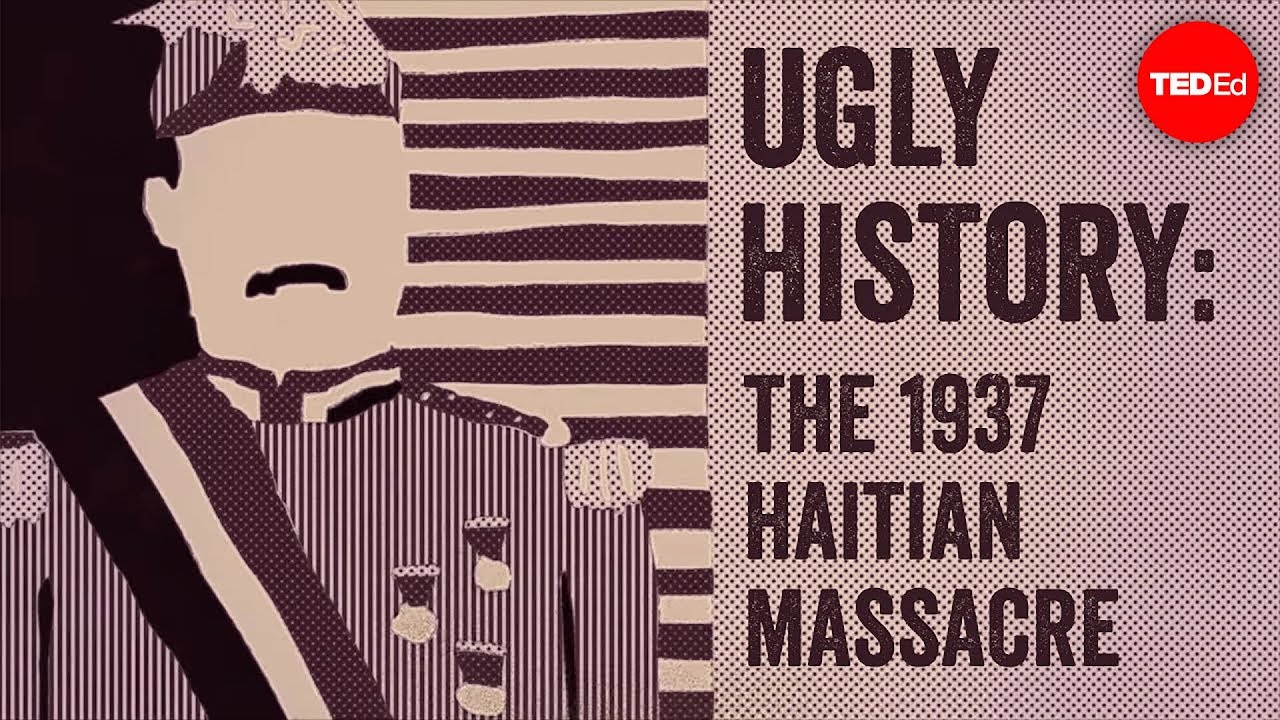
Explore the history of the 1937 Haitian Massacre, where thousands of Haitians were murdered on the orders of Rafael Trujillo. -- When historians talk about the atrocities of the 20th century, we often think of those that took place during and between the two World Wars. But two months before the Rape of Nanking in China, and a year before Kristallnacht in Germany, a horrific ethnic cleansing campaign occurred on an island between the Atlantic Ocean and Caribbean Sea. Edward Paulino details the 1937 Haitian Massacre. Lesson by Edward Paulino, animation by Tomás Pichardo-Espaillat. Support Our Non-Profit Mission ---------------------------------------------- Support us on Patreon: Check out our merch: ---------------------------------------------- Connect With Us ---------------------------------------------- Sign up for our newsletter: Follow us on Facebook: Find us on Twitter: Peep us on Instagram: ---------------------------------------------- Keep Learning ---------------------------------------------- View full lesson: Dig deeper with additional resources: Animator's website: ---------------------------------------------- Thank you so much to our patrons for your support! Without you this video would not be possible! Nathan A. Wright, Jast3r, Аркадий Скайуокер, Milad Mostafavi, Rob Johnson, Singh Devesh Sourabh, Ashley Maldonado, Clarence E. Harper Jr., Bojana Golubovic, Mihail Radu Pantilimon, Sarah Yaghi, Benedict Chuah, Karthik Cherala, haventfiguredout , Violeta Cervantes, Elaine Fitzpatrick, Lyn-z Schulte, Sharon Chou, Henrique 'Sorín' Cassús, Tim Robinson, Kiarash Asar, Jun Cai, Paul Schneider, Amber Wood, Ophelia Gibson Best, Cas Jamieson, Michelle Stevens-Stanford, Phyllis Dubrow, Andreas Voltios, Aliyya Rachmadi, Eunsun Kim, Philippe Spoden, Samantha Chow, Armando Ello, Ayala Ron, and Manognya Chakrapani.
आपको ये भी पसंद आ सकते हैं
Primary 1 English
CoComelon
Careers in business, marketing and finance
Mighty Little Bheem | Netflix Jr.
CoComelon Learn ABCs #Shorts!
CoComelon Lane | Netflix Jr
ABC Videos: Write the Letter - Alphabet Writing Lessons for Children
ChuChu & Friends in Storytime Adventures - ChuChu TV
Pink Panther Show | Compilations
Nursery Rhymes
Learn English With Disney Movies
The Original CoComelon Alphabet Series
Masha and the Bear 📱 Shorts!
English Fairy Tales @EnglishFairyTales
Best Nursery Rhymes & Kids Songs - by BabyBus
Year4 English
Classic Fairy Tales: Season 1
CoComelon Lane | Netflix Jr
Linux System Programming and Introduction to Buildroot
IELTS Listening and Speaking Sections Skills Mastery
Sex Ed
Exams and revision
Princess Power | Netflix Jr
Careers in science and technology
टिप्पणियाँ
10 टिप्पणियाँ
Dig into the bitter history of kola nuts, a sacred ingredient in West African culture and part of Coca-Cola's original recipe. -- The kola nut is the seed of the kola tree, a small evergreen native to the forests of West Africa, where it’s long been integral to the cultural fabric of many communities. So, how did this sacred ingredient end up all around the world? And how did it make its way into the original recipe of a drink that billions of people consume every day? Shantel George explores the bitter history of kola nuts. Lesson by Shantel George, directed by Nikhita Prabhudesai Jeena, Totem Creative. Support Our Non-Profit Mission ---------------------------------------------- Support us on Patreon: http://bit.ly/TEDEdPatreon Check out our merch: http://bit.ly/TEDEDShop ---------------------------------------------- Connect With Us ---------------------------------------------- Sign up for our newsletter: http://bit.ly/TEDEdNewsletter Follow us on Facebook: http://bit.ly/TEDEd
Dig into the bitter history of kola nuts, a sacred ingredient in West African culture and part of Coca-Cola's original recipe. -- The kola nut is the seed of the kola tree, a small evergreen native to the forests of West Africa, where it’s long been integral to the cultural fabric of many communities. So, how did this sacred ingredient end up all around the world? And how did it make its way into the original recipe of a drink that billions of people consume every day? Shantel George explores the bitter history of kola nuts. Lesson by Shantel George, directed by Nikhita Prabhudesai Jeena, Totem Creative. Support Our Non-Profit Mission ---------------------------------------------- Support us on Patreon: http://bit.ly/TEDEdPatreon Check out our merch: http://bit.ly/TEDEDShop ---------------------------------------------- Connect With Us ---------------------------------------------- Sign up for our newsletter: http://bit.ly/TEDEdNewsletter Follow us on Facebook: http://bit.ly/TEDEd
Uncover the history of the lobotomy, and find out why it's considered one of the most controversial procedures of the 20th century. -- In 1935, researchers found that after removing the frontal lobes of two chimps, they no longer experienced frustration or anxiety. Neurologist Egas Moniz believed that replicating this in humans could cure mental illness— leading to one of the most controversial and destructive medical treatments of the 20th century: the lobotomy. Jenell Johnson uncovers the history of the procedure. Lesson by Jenell Johnson, directed by Anton Bogaty. Support Our Non-Profit Mission ---------------------------------------------- Support us on Patreon: http://bit.ly/TEDEdPatreon Check out our merch: http://bit.ly/TEDEDShop ---------------------------------------------- Connect With Us ---------------------------------------------- Sign up for our newsletter: http://bit.ly/TEDEdNewsletter Follow us on Facebook: http://bit.ly/TEDEdFacebook Find us on Twitter: http://bi
Uncover the history of the lobotomy, and find out why it's considered one of the most controversial procedures of the 20th century. -- In 1935, researchers found that after removing the frontal lobes of two chimps, they no longer experienced frustration or anxiety. Neurologist Egas Moniz believed that replicating this in humans could cure mental illness— leading to one of the most controversial and destructive medical treatments of the 20th century: the lobotomy. Jenell Johnson uncovers the history of the procedure. Lesson by Jenell Johnson, directed by Anton Bogaty. Support Our Non-Profit Mission ---------------------------------------------- Support us on Patreon: http://bit.ly/TEDEdPatreon Check out our merch: http://bit.ly/TEDEDShop ---------------------------------------------- Connect With Us ---------------------------------------------- Sign up for our newsletter: http://bit.ly/TEDEdNewsletter Follow us on Facebook: http://bit.ly/TEDEdFacebook Find us on Twitter: http://bi
Dig into the history of the Armenian Genocide, during which the Ottoman Empire killed over 1 million Armenians during WWI. -- When an Armenian resistance movement began to form in the 19th century, Sultan Abdul Hamid II took decisive action. He led the Hamidian Massacres— a relentless campaign of violence that killed over 150,000 Armenians. These massacres were the culmination of centuries of oppression, yet they were only the beginning of an even greater tragedy. Ümit Kurt uncovers the history of the Armenian Genocide. Lesson by Ümit Kurt, directed by Héloïse Dorsan-Rachet. Support Our Non-Profit Mission ---------------------------------------------- Support us on Patreon: http://bit.ly/TEDEdPatreon Check out our merch: http://bit.ly/TEDEDShop ---------------------------------------------- Connect With Us ---------------------------------------------- Sign up for our newsletter: http://bit.ly/TEDEdNewsletter Follow us on Facebook: http://bit.ly/TEDEdFacebook Find us on Twitter: h
Dig into the history of the Armenian Genocide, during which the Ottoman Empire killed over 1 million Armenians during WWI. -- When an Armenian resistance movement began to form in the 19th century, Sultan Abdul Hamid II took decisive action. He led the Hamidian Massacres— a relentless campaign of violence that killed over 150,000 Armenians. These massacres were the culmination of centuries of oppression, yet they were only the beginning of an even greater tragedy. Ümit Kurt uncovers the history of the Armenian Genocide. Lesson by Ümit Kurt, directed by Héloïse Dorsan-Rachet. Support Our Non-Profit Mission ---------------------------------------------- Support us on Patreon: http://bit.ly/TEDEdPatreon Check out our merch: http://bit.ly/TEDEDShop ---------------------------------------------- Connect With Us ---------------------------------------------- Sign up for our newsletter: http://bit.ly/TEDEdNewsletter Follow us on Facebook: http://bit.ly/TEDEdFacebook Find us on Twitter: h
Dig into Operation Paperclip, a secret intelligence program which brought scientists from Nazi Germany to the US after WWII. -- In May of 1945 the Third Reich was in chaos. Adolf Hitler was dead and German surrender was imminent. But while World War II was almost over, a new war was brewing. And the US was eager to recruit the smartest minds in Germany before the Soviets got the chance— regardless of their affiliation with the Nazis. This became known as Operation Paperclip. Brian Crim digs into the clandestine campaign. Lesson by Brian Crim, directed by Jeff Le Bars, JetPropulsion.space. Support Our Non-Profit Mission ---------------------------------------------- Support us on Patreon: http://bit.ly/TEDEdPatreon Check out our merch: http://bit.ly/TEDEDShop ---------------------------------------------- Connect With Us ---------------------------------------------- Sign up for our newsletter: http://bit.ly/TEDEdNewsletter Follow us on Facebook: http://bit.ly/TEDEdFacebook Find us
Dig into Operation Paperclip, a secret intelligence program which brought scientists from Nazi Germany to the US after WWII. -- In May of 1945 the Third Reich was in chaos. Adolf Hitler was dead and German surrender was imminent. But while World War II was almost over, a new war was brewing. And the US was eager to recruit the smartest minds in Germany before the Soviets got the chance— regardless of their affiliation with the Nazis. This became known as Operation Paperclip. Brian Crim digs into the clandestine campaign. Lesson by Brian Crim, directed by Jeff Le Bars, JetPropulsion.space. Support Our Non-Profit Mission ---------------------------------------------- Support us on Patreon: http://bit.ly/TEDEdPatreon Check out our merch: http://bit.ly/TEDEDShop ---------------------------------------------- Connect With Us ---------------------------------------------- Sign up for our newsletter: http://bit.ly/TEDEdNewsletter Follow us on Facebook: http://bit.ly/TEDEdFacebook Find us
Explore how Dutch and British colonization of South Africa led to Apartheid, the strict national policy of racial segregation. -- For 46 years, South Africans lived under Apartheid, a strict policy of segregation that barred the country’s Black majority from skilled, high-paying jobs, quality education, voting, and much more. So, how did these laws come to be? And how did this era of institutionalized discrimination finally come to an end? Thula Simpson explores how colonization led to the national trauma of Apartheid. Lesson by Thula Simpson, directed by Aya Marzouk, Giraffics. Support Our Non-Profit Mission ---------------------------------------------- Support us on Patreon: http://bit.ly/TEDEdPatreon Check out our merch: http://bit.ly/TEDEDShop ---------------------------------------------- Connect With Us ---------------------------------------------- Sign up for our newsletter: http://bit.ly/TEDEdNewsletter Follow us on Facebook: http://bit.ly/TEDEdFacebook Find us on Twitte
Explore how Dutch and British colonization of South Africa led to Apartheid, the strict national policy of racial segregation. -- For 46 years, South Africans lived under Apartheid, a strict policy of segregation that barred the country’s Black majority from skilled, high-paying jobs, quality education, voting, and much more. So, how did these laws come to be? And how did this era of institutionalized discrimination finally come to an end? Thula Simpson explores how colonization led to the national trauma of Apartheid. Lesson by Thula Simpson, directed by Aya Marzouk, Giraffics. Support Our Non-Profit Mission ---------------------------------------------- Support us on Patreon: http://bit.ly/TEDEdPatreon Check out our merch: http://bit.ly/TEDEDShop ---------------------------------------------- Connect With Us ---------------------------------------------- Sign up for our newsletter: http://bit.ly/TEDEdNewsletter Follow us on Facebook: http://bit.ly/TEDEdFacebook Find us on Twitte