
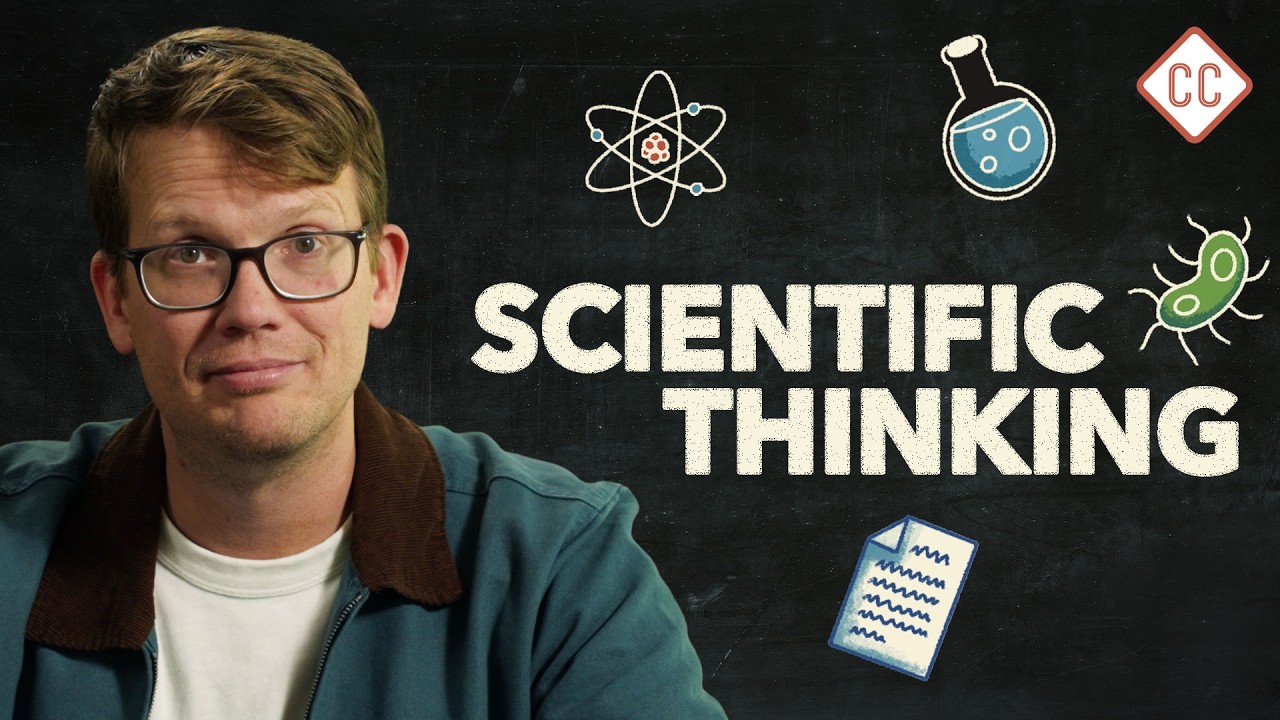
In 7 episodes, Crash Course Scientific Thinking will teach learners the foundational principles underlying scientific thought, pulling back the curtain on processes like peer review, interrogating what makes sources reliable (or not), unpacking how consensus is reached, and revealing how scientific understanding changes over time. Ultimately, learners will gain the ability to think more critically about the scientific information they encounter in their everyday lives. Series Objectives - Describe the dynamic, communal nature of science, articulating the roles of uncertainty and consensus. - Explain the role of peer review and replication in science. - Unpack the potential for bias and error in science and understand its self-correction mechanisms. - Understand the role of specialization in scientific expertise. - Interpret primary, secondary, and tertiary sources, and use lateral reading to verify claims. - Understand basic statistical language used to describe scientific findings.
Maaari Mo Ring Magustuhan
English learning videos for kids - Lingokids
CoComelon Lane! Brand New Netflix Kids Show!
Halloween Songs For Kids - CoComelon
Year7 German
More Christmas Videos!
The Science of Study
Incredible Humans
Kids Songs by CoComelon
Year 10 Science
Year1 Science
Year4 Science
Year3 Science
Beekeeping with Maddie
Back to School - Expanded
Year2 Science
What is pollination? | Plants for kids
شرح علوم 2 اعدادي - فصل 2
مقاطع العلوم | الصف الخامس الابتدائي | الترم الأول (2025 - 2026)
SS 3 Chemistry
Educational Videos for Children - Lingokids
Year 11 Science
Do You Know? MAKES!
Year 1 Science
Year6 Science
Mga Komento
10 Mga Komento
We know smoking causes cancer. But the journey to that knowledge is way wilder than you think. In our last episode of Crash Course Scientific Thinking, we’ll explore what happens when scientific research clashes with public opinion, individual values, and corporate interests. Introduction: Smoking Causes Cancer 00:00 Empirical Evidence 0:39 Researching Lung Cancer 1:54 Manufactured Doubt 4:15 The Fall of Tobacco 7:03 Individual Choice & Values 7:36 Takeaways from the War on Smoking 8:31 Review & Credits 10:43 Sources: https://docs.google.com/document/d/1Kv2_mFsDxQURuFDxpflD45dy-pCxlqnM9iPSNYxigmQ/edit?tab=t.0#heading=h.vk5i2fgqyumq *** Support us for $5/month on Patreon to keep Crash Course free for everyone forever! https://www.patreon.com/crashcourse Or support us directly: https://complexly.com/support Join our Crash Course email list to get the latest news and highlights: https://mailchi.mp/crashcourse/email Get our special Crash Course Educators newsletter: http://eepurl.com/iB
We know smoking causes cancer. But the journey to that knowledge is way wilder than you think. In our last episode of Crash Course Scientific Thinking, we’ll explore what happens when scientific research clashes with public opinion, individual values, and corporate interests. Introduction: Smoking Causes Cancer 00:00 Empirical Evidence 0:39 Researching Lung Cancer 1:54 Manufactured Doubt 4:15 The Fall of Tobacco 7:03 Individual Choice & Values 7:36 Takeaways from the War on Smoking 8:31 Review & Credits 10:43 Sources: https://docs.google.com/document/d/1Kv2_mFsDxQURuFDxpflD45dy-pCxlqnM9iPSNYxigmQ/edit?tab=t.0#heading=h.vk5i2fgqyumq *** Support us for $5/month on Patreon to keep Crash Course free for everyone forever! https://www.patreon.com/crashcourse Or support us directly: https://complexly.com/support Join our Crash Course email list to get the latest news and highlights: https://mailchi.mp/crashcourse/email Get our special Crash Course Educators newsletter: http://eepurl.com/iB
We know smoking causes cancer. But the journey to that knowledge is way wilder than you think. In our last episode of Crash Course Scientific Thinking, we’ll explore what happens when scientific research clashes with public opinion, individual values, and corporate interests. Introduction: Smoking Causes Cancer 00:00 Empirical Evidence 0:39 Researching Lung Cancer 1:54 Manufactured Doubt 4:15 The Fall of Tobacco 7:03 Individual Choice & Values 7:36 Takeaways from the War on Smoking 8:31 Review & Credits 10:43 Sources: https://docs.google.com/document/d/1Kv2_mFsDxQURuFDxpflD45dy-pCxlqnM9iPSNYxigmQ/edit?tab=t.0#heading=h.vk5i2fgqyumq *** Support us for $5/month on Patreon to keep Crash Course free for everyone forever! https://www.patreon.com/crashcourse Or support us directly: https://complexly.com/support Join our Crash Course email list to get the latest news and highlights: https://mailchi.mp/crashcourse/email Get our special Crash Course Educators newsletter: http://eepurl.com/iB
We know smoking causes cancer. But the journey to that knowledge is way wilder than you think. In our last episode of Crash Course Scientific Thinking, we’ll explore what happens when scientific research clashes with public opinion, individual values, and corporate interests. Introduction: Smoking Causes Cancer 00:00 Empirical Evidence 0:39 Researching Lung Cancer 1:54 Manufactured Doubt 4:15 The Fall of Tobacco 7:03 Individual Choice & Values 7:36 Takeaways from the War on Smoking 8:31 Review & Credits 10:43 Sources: https://docs.google.com/document/d/1Kv2_mFsDxQURuFDxpflD45dy-pCxlqnM9iPSNYxigmQ/edit?tab=t.0#heading=h.vk5i2fgqyumq *** Support us for $5/month on Patreon to keep Crash Course free for everyone forever! https://www.patreon.com/crashcourse Or support us directly: https://complexly.com/support Join our Crash Course email list to get the latest news and highlights: https://mailchi.mp/crashcourse/email Get our special Crash Course Educators newsletter: http://eepurl.com/iB
Are you consuming a credit card’s worth of misinformation every week? In this episode of Crash Course Scientific Thinking, we’ll learn how to check facts and evaluate sources, so we can figure out what science coverage to believe, and what to ignore. Introduction: Eating Plastic? 00:00 WWF Study and Types of Sources 0:26 The SIFT Method 4:02 Evaluating Sources 7:42 Review & Credits 9:01 Sources: https://docs.google.com/document/d/1Kv2_mFsDxQURuFDxpflD45dy-pCxlqnM9iPSNYxigmQ/edit?tab=t.0#heading=h.vk5i2fgqyumq *** Support us for $5/month on Patreon to keep Crash Course free for everyone forever! https://www.patreon.com/crashcourse Or support us directly: https://complexly.com/support Join our Crash Course email list to get the latest news and highlights: https://mailchi.mp/crashcourse/email Get our special Crash Course Educators newsletter: http://eepurl.com/iBgMhY Thanks to the following patrons for their generous monthly contributions that help keep Crash Course free for everyone
Are you consuming a credit card’s worth of misinformation every week? In this episode of Crash Course Scientific Thinking, we’ll learn how to check facts and evaluate sources, so we can figure out what science coverage to believe, and what to ignore. Introduction: Eating Plastic? 00:00 WWF Study and Types of Sources 0:26 The SIFT Method 4:02 Evaluating Sources 7:42 Review & Credits 9:01 Sources: https://docs.google.com/document/d/1Kv2_mFsDxQURuFDxpflD45dy-pCxlqnM9iPSNYxigmQ/edit?tab=t.0#heading=h.vk5i2fgqyumq *** Support us for $5/month on Patreon to keep Crash Course free for everyone forever! https://www.patreon.com/crashcourse Or support us directly: https://complexly.com/support Join our Crash Course email list to get the latest news and highlights: https://mailchi.mp/crashcourse/email Get our special Crash Course Educators newsletter: http://eepurl.com/iBgMhY Thanks to the following patrons for their generous monthly contributions that help keep Crash Course free for everyone
Are you consuming a credit card’s worth of misinformation every week? In this episode of Crash Course Scientific Thinking, we’ll learn how to check facts and evaluate sources, so we can figure out what science coverage to believe, and what to ignore. Introduction: Eating Plastic? 00:00 WWF Study and Types of Sources 0:26 The SIFT Method 4:02 Evaluating Sources 7:42 Review & Credits 9:01 Sources: https://docs.google.com/document/d/1Kv2_mFsDxQURuFDxpflD45dy-pCxlqnM9iPSNYxigmQ/edit?tab=t.0#heading=h.vk5i2fgqyumq *** Support us for $5/month on Patreon to keep Crash Course free for everyone forever! https://www.patreon.com/crashcourse Or support us directly: https://complexly.com/support Join our Crash Course email list to get the latest news and highlights: https://mailchi.mp/crashcourse/email Get our special Crash Course Educators newsletter: http://eepurl.com/iBgMhY Thanks to the following patrons for their generous monthly contributions that help keep Crash Course free for everyone
Are you consuming a credit card’s worth of misinformation every week? In this episode of Crash Course Scientific Thinking, we’ll learn how to check facts and evaluate sources, so we can figure out what science coverage to believe, and what to ignore. Introduction: Eating Plastic? 00:00 WWF Study and Types of Sources 0:26 The SIFT Method 4:02 Evaluating Sources 7:42 Review & Credits 9:01 Sources: https://docs.google.com/document/d/1Kv2_mFsDxQURuFDxpflD45dy-pCxlqnM9iPSNYxigmQ/edit?tab=t.0#heading=h.vk5i2fgqyumq *** Support us for $5/month on Patreon to keep Crash Course free for everyone forever! https://www.patreon.com/crashcourse Or support us directly: https://complexly.com/support Join our Crash Course email list to get the latest news and highlights: https://mailchi.mp/crashcourse/email Get our special Crash Course Educators newsletter: http://eepurl.com/iBgMhY Thanks to the following patrons for their generous monthly contributions that help keep Crash Course free for everyone
Why is there consensus around atoms existing, but not around if chocolate is good for you? In this episode of Crash Course Scientific Thinking, we’ll explore why there are still things we don’t know about topics we know a lot about, and why scientific consensus is the closest thing to “the truth.” Introduction: Scientific Uncertainty 00:00 Scientific Consensus 0:33 Atomic Theory 1:28 Nutrition Science 4:21 Changing Consensus 6:48 Scientific Consensus in our Everyday Lives 7:26 Review & Credits 9:14 Sources: https://docs.google.com/document/d/1Kv2_mFsDxQURuFDxpflD45dy-pCxlqnM9iPSNYxigmQ/edit?tab=t.0#heading=h.vk5i2fgqyumq *** Support us for $5/month on Patreon to keep Crash Course free for everyone forever! https://www.patreon.com/crashcourse Or support us directly: https://complexly.com/support Join our Crash Course email list to get the latest news and highlights: https://mailchi.mp/crashcourse/email Get our special Crash Course Educators newsletter: http://eepurl.com/iBgMhY Than
Why is there consensus around atoms existing, but not around if chocolate is good for you? In this episode of Crash Course Scientific Thinking, we’ll explore why there are still things we don’t know about topics we know a lot about, and why scientific consensus is the closest thing to “the truth.” Introduction: Scientific Uncertainty 00:00 Scientific Consensus 0:33 Atomic Theory 1:28 Nutrition Science 4:21 Changing Consensus 6:48 Scientific Consensus in our Everyday Lives 7:26 Review & Credits 9:14 Sources: https://docs.google.com/document/d/1Kv2_mFsDxQURuFDxpflD45dy-pCxlqnM9iPSNYxigmQ/edit?tab=t.0#heading=h.vk5i2fgqyumq *** Support us for $5/month on Patreon to keep Crash Course free for everyone forever! https://www.patreon.com/crashcourse Or support us directly: https://complexly.com/support Join our Crash Course email list to get the latest news and highlights: https://mailchi.mp/crashcourse/email Get our special Crash Course Educators newsletter: http://eepurl.com/iBgMhY Than