
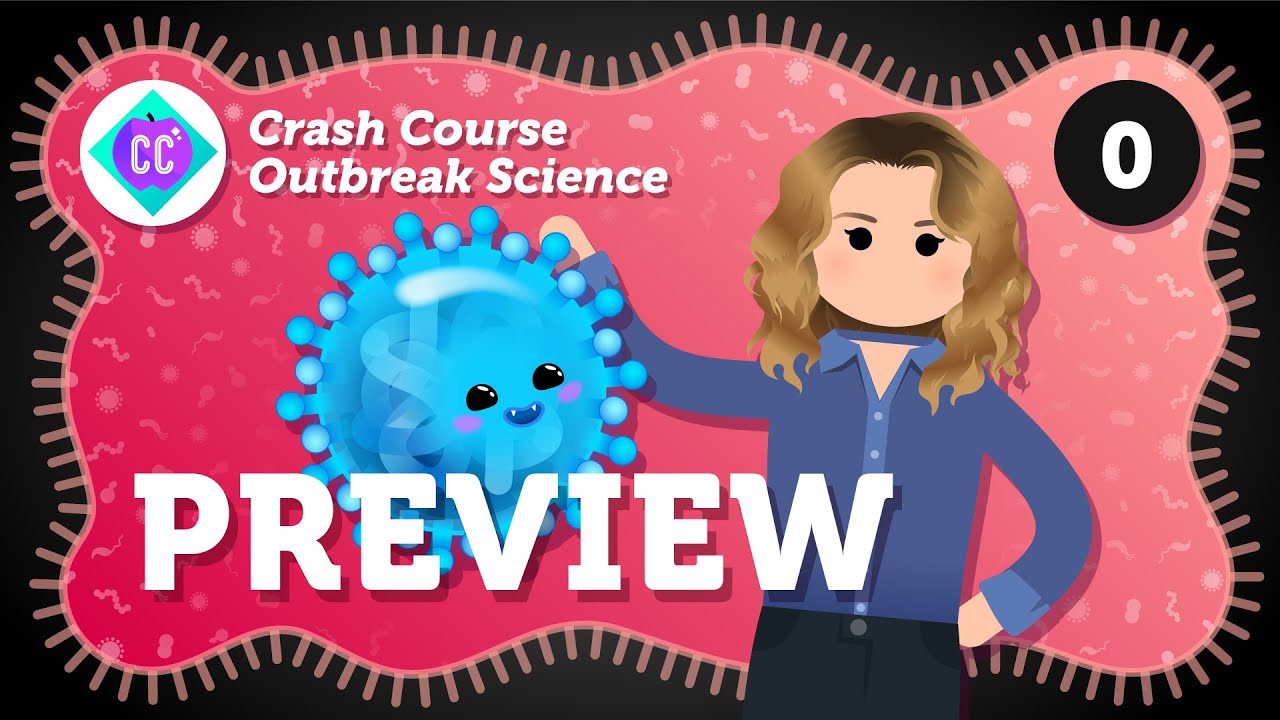
Welcome to Crash Course Outbreak Science! What do pathogens actually do to us that makes us sick? Why do societies respond to outbreaks of infectious diseases the way they do? How can we stop the next outbreak? These are the kinds of questions we'll ask ourselves and answer as best we can in this 15-episode series. Join us and Dr. Pardis Sabeti as we look at outbreaks from the microscopic level, to the big picture, so that we can work together to stop future outbreaks and create a healthier future for everyone.
Maaari Mo Ring Magustuhan
Year 10 Science
Back to School - Expanded
Year 6 Science
Year 4 Science
Kids Songs by CoComelon
Learn English With Disney Movies
Learn Colors with CoComelon!
Year1 English
More Christmas Videos!
The Science of Study
Incredible Humans
CoComelon
Year 11 Science
Year1 Science
Year4 Science
Year3 Science
Beekeeping with Maddie
Year2 Science
What is pollination? | Plants for kids
OCEANS 🐳
Science in the Garden! | SciShow Kids
العلوم الصف الثالث الابتدائي الفصل الدراسي الثاني
علوم - الصف الثامن - ف2
SS 1 Physics
Mga Komento
10 Mga Komento
Over the course of this series, we've seen that outbreak science is actually MANY sciences, including biology, epidemiology, sociology, and even economics! Because outbreak science is an interdisciplinary field, everyone has a role to play in ending outbreaks, including you! In this final episode of Crash Course Outbreak Science, we'll take a look at how different fields come together to prepare for and prevent outbreaks. This episode of Crash Course Outbreak Science was produced by Complexly in partnership with Operation Outbreak and the Sabeti Lab at the Broad Institute of MIT and Harvard—with generous support from the Gordon and Betty Moore Foundation. Episode Sources: https://www.ncbi.nlm.nih.gov/pmc/articles/PMC7149515/ https://www.ncbi.nlm.nih.gov/books/NBK11770/ https://journals.plos.org/plosmedicine/article?id=10.1371/journal.pmed.1001413 https://pubmed.ncbi.nlm.nih.gov/25960093/#:~:text=The%20disease%20infects%20humans%20through,died%20of%20Ebola%20virus%20disease. https://w
Over the course of this series, we've seen that outbreak science is actually MANY sciences, including biology, epidemiology, sociology, and even economics! Because outbreak science is an interdisciplinary field, everyone has a role to play in ending outbreaks, including you! In this final episode of Crash Course Outbreak Science, we'll take a look at how different fields come together to prepare for and prevent outbreaks. This episode of Crash Course Outbreak Science was produced by Complexly in partnership with Operation Outbreak and the Sabeti Lab at the Broad Institute of MIT and Harvard—with generous support from the Gordon and Betty Moore Foundation. Episode Sources: https://www.ncbi.nlm.nih.gov/pmc/articles/PMC7149515/ https://www.ncbi.nlm.nih.gov/books/NBK11770/ https://journals.plos.org/plosmedicine/article?id=10.1371/journal.pmed.1001413 https://pubmed.ncbi.nlm.nih.gov/25960093/#:~:text=The%20disease%20infects%20humans%20through,died%20of%20Ebola%20virus%20disease. https://w
Over the course of this series, we've seen that outbreak science is actually MANY sciences, including biology, epidemiology, sociology, and even economics! Because outbreak science is an interdisciplinary field, everyone has a role to play in ending outbreaks, including you! In this final episode of Crash Course Outbreak Science, we'll take a look at how different fields come together to prepare for and prevent outbreaks. This episode of Crash Course Outbreak Science was produced by Complexly in partnership with Operation Outbreak and the Sabeti Lab at the Broad Institute of MIT and Harvard—with generous support from the Gordon and Betty Moore Foundation. Episode Sources: https://www.ncbi.nlm.nih.gov/pmc/articles/PMC7149515/ https://www.ncbi.nlm.nih.gov/books/NBK11770/ https://journals.plos.org/plosmedicine/article?id=10.1371/journal.pmed.1001413 https://pubmed.ncbi.nlm.nih.gov/25960093/#:~:text=The%20disease%20infects%20humans%20through,died%20of%20Ebola%20virus%20disease. https://w
Throughout this series, and in our real lives, we've seen the chaos and devastation that outbreaks can cause. But there's good news! Eventually, outbreaks come to an end. In this episode, we'll look at some of the important tools of outbreak response, particularly vaccines, and also discuss the important work that happens in the aftermath of an outbreak. This episode of Crash Course Outbreak Science was produced by Complexly in partnership with Operation Outbreak and the Sabeti Lab at the Broad Institute of MIT and Harvard—with generous support from the Gordon and Betty Moore Foundation. Episode Sources: https://www.cdc.gov/foodsafety/outbreaks/investigating-outbreaks/investigations/decision.html#:~:text=An%20outbreak%20is%20over%20when,the%20investigation%20continues%20or%20restarts. https://ourworldindata.org/hiv-aids https://vk.ovg.ox.ac.uk/vk/types-of-vaccine https://www.cdc.gov/sepsis/life-after-sepsis/index.html https://www.cdc.gov/sepsis/what-is-sepsis.html https://www.microbi
Throughout this series, and in our real lives, we've seen the chaos and devastation that outbreaks can cause. But there's good news! Eventually, outbreaks come to an end. In this episode, we'll look at some of the important tools of outbreak response, particularly vaccines, and also discuss the important work that happens in the aftermath of an outbreak. This episode of Crash Course Outbreak Science was produced by Complexly in partnership with Operation Outbreak and the Sabeti Lab at the Broad Institute of MIT and Harvard—with generous support from the Gordon and Betty Moore Foundation. Episode Sources: https://www.cdc.gov/foodsafety/outbreaks/investigating-outbreaks/investigations/decision.html#:~:text=An%20outbreak%20is%20over%20when,the%20investigation%20continues%20or%20restarts. https://ourworldindata.org/hiv-aids https://vk.ovg.ox.ac.uk/vk/types-of-vaccine https://www.cdc.gov/sepsis/life-after-sepsis/index.html https://www.cdc.gov/sepsis/what-is-sepsis.html https://www.microbi
Throughout this series, and in our real lives, we've seen the chaos and devastation that outbreaks can cause. But there's good news! Eventually, outbreaks come to an end. In this episode, we'll look at some of the important tools of outbreak response, particularly vaccines, and also discuss the important work that happens in the aftermath of an outbreak. This episode of Crash Course Outbreak Science was produced by Complexly in partnership with Operation Outbreak and the Sabeti Lab at the Broad Institute of MIT and Harvard—with generous support from the Gordon and Betty Moore Foundation. Episode Sources: https://www.cdc.gov/foodsafety/outbreaks/investigating-outbreaks/investigations/decision.html#:~:text=An%20outbreak%20is%20over%20when,the%20investigation%20continues%20or%20restarts. https://ourworldindata.org/hiv-aids https://vk.ovg.ox.ac.uk/vk/types-of-vaccine https://www.cdc.gov/sepsis/life-after-sepsis/index.html https://www.cdc.gov/sepsis/what-is-sepsis.html https://www.microbi
Throughout this series, and in our real lives, we've seen the chaos and devastation that outbreaks can cause. But there's good news! Eventually, outbreaks come to an end. In this episode, we'll look at some of the important tools of outbreak response, particularly vaccines, and also discuss the important work that happens in the aftermath of an outbreak. This episode of Crash Course Outbreak Science was produced by Complexly in partnership with Operation Outbreak and the Sabeti Lab at the Broad Institute of MIT and Harvard—with generous support from the Gordon and Betty Moore Foundation. Episode Sources: https://www.cdc.gov/foodsafety/outbreaks/investigating-outbreaks/investigations/decision.html#:~:text=An%20outbreak%20is%20over%20when,the%20investigation%20continues%20or%20restarts. https://ourworldindata.org/hiv-aids https://vk.ovg.ox.ac.uk/vk/types-of-vaccine https://www.cdc.gov/sepsis/life-after-sepsis/index.html https://www.cdc.gov/sepsis/what-is-sepsis.html https://www.microbi
When we think of how we respond to outbreaks, we often think of physical things like vaccines or medicines, but there is another factor that is just as critical to understand: culture! Culture determines how we collaborate and use the resources at our disposal in the face of an outbreak. So in this episode of Crash Course Outbreak Science, we'll look at the ways culture impacts our outbreak response, and in turn how outbreaks can change our cultures. This episode of Crash Course Outbreak Science was produced by Complexly in partnership with Operation Outbreak and the Sabeti Lab at the Broad Institute of MIT and Harvard—with generous support from the Gordon and Betty Moore Foundation. Music: Sad Trio by Kevin MacLeod Link: https://incompetech.filmmusic.io/song/4314-sad-trio License: https://filmmusic.io/standard-license Sources: https://www.euro.who.int/__data/assets/pdf_file/0009/334269/14780_World-Health-Organisation_Context-of-Health_TEXT-AW-WEB.pdf https://link.springer.com/chapt
When we think of how we respond to outbreaks, we often think of physical things like vaccines or medicines, but there is another factor that is just as critical to understand: culture! Culture determines how we collaborate and use the resources at our disposal in the face of an outbreak. So in this episode of Crash Course Outbreak Science, we'll look at the ways culture impacts our outbreak response, and in turn how outbreaks can change our cultures. This episode of Crash Course Outbreak Science was produced by Complexly in partnership with Operation Outbreak and the Sabeti Lab at the Broad Institute of MIT and Harvard—with generous support from the Gordon and Betty Moore Foundation. Music: Sad Trio by Kevin MacLeod Link: https://incompetech.filmmusic.io/song/4314-sad-trio License: https://filmmusic.io/standard-license Sources: https://www.euro.who.int/__data/assets/pdf_file/0009/334269/14780_World-Health-Organisation_Context-of-Health_TEXT-AW-WEB.pdf https://link.springer.com/chapt
When we think of how we respond to outbreaks, we often think of physical things like vaccines or medicines, but there is another factor that is just as critical to understand: culture! Culture determines how we collaborate and use the resources at our disposal in the face of an outbreak. So in this episode of Crash Course Outbreak Science, we'll look at the ways culture impacts our outbreak response, and in turn how outbreaks can change our cultures. This episode of Crash Course Outbreak Science was produced by Complexly in partnership with Operation Outbreak and the Sabeti Lab at the Broad Institute of MIT and Harvard—with generous support from the Gordon and Betty Moore Foundation. Music: Sad Trio by Kevin MacLeod Link: https://incompetech.filmmusic.io/song/4314-sad-trio License: https://filmmusic.io/standard-license Sources: https://www.euro.who.int/__data/assets/pdf_file/0009/334269/14780_World-Health-Organisation_Context-of-Health_TEXT-AW-WEB.pdf https://link.springer.com/chapt