
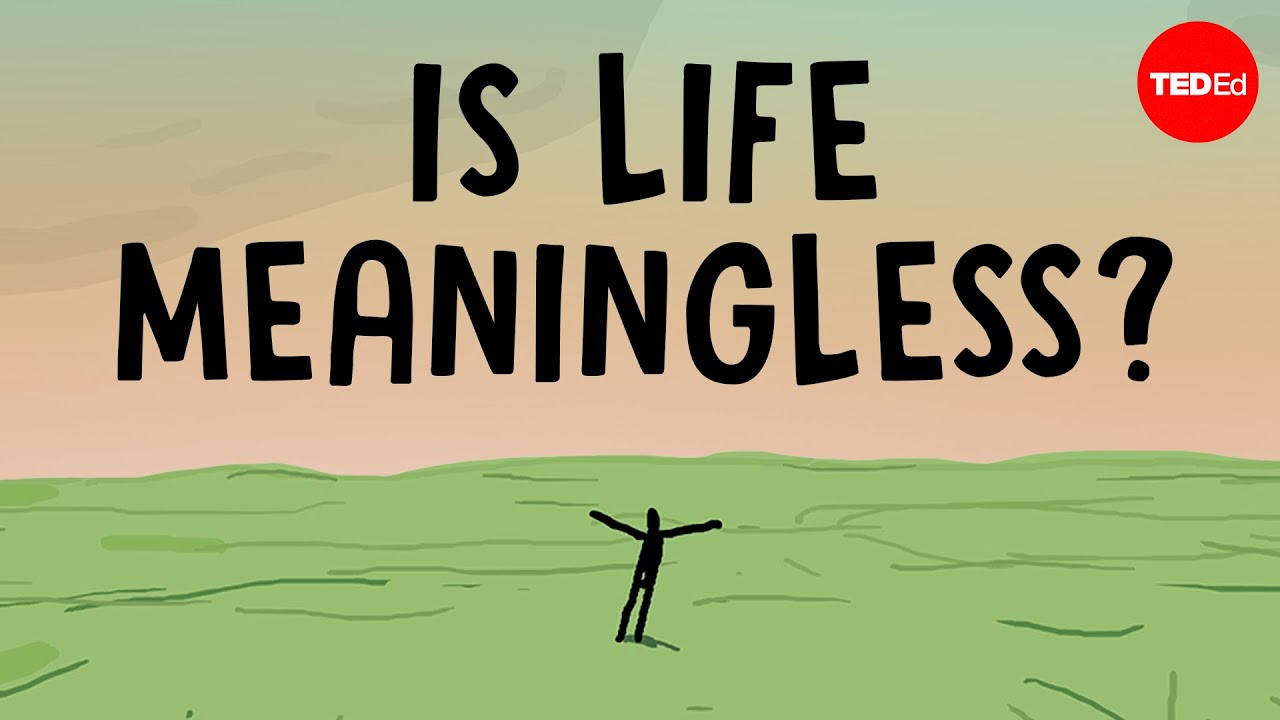
Dive into Albert Camus’ philosophy of the absurd, and explore the question: if the world is meaningless, could our lives still hold value? -- Albert Camus grew up surrounded by violence. His homeland of Algeria was mired in conflict. He lost his father in World War I. Seeing World War II's devastation, Camus grew despondent. What was the meaning behind all this endless bloodshed and suffering? And if the world was meaningless, could our individual lives still hold value? Nina Medvinskaya explores Camus’ philosophy of the absurd. Lesson by Nina Medvinskaya, directed by Avi Ofer. Animator's website: Sign up for our newsletter: Support us on Patreon: Follow us on Facebook: Find us on Twitter: Peep us on Instagram: View full lesson: Thank you so much to our patrons for your support! Without you this video would not be possible! Carlos H. Costa, Eimann P. Evarola, Aleksandr Lyozin, Mohamed Elsayed, Alan Wilder, Marcus Appelbaum, Francisco Leos, Kevin O'Leary, Les Howard, Ten Cha, Mehmet Yusuf Ertekin, Arlene Weston, phkphk123321, Jennifer Kurkoski, Ryan B Harvey, Austin Randall, Abhishek Bansal, Jayant Sahewal, Dian Atamyanov, igor romanenko, Jose Arcadio Valdes Franco, Brandy Sarver, Guy Hardy, Tu-Anh Nguyen, Karl Laius, Madee Lo, JY Kang, Marc Bou Zeid, Abhishek Goel, Charles A Hershberger, Coenraad Keuning, Robert Seik, Heidi Stolt, Alexis Hevia, Todd Gross, Brady Jones, Christina Salvatore, Zhong Ming Zenny Tan, Karisa Caudill, Bruno Pinho, Derek Drescher, Mihail Radu Pantilimon, Amin Shahril, Mohamed Elsayed, Barthélémy Michalon, Chumi Ogbonna, Karlee Finch, Mohammad Said, jj5252 and Kelvin Lam.
Mungkin Anda Juga Suka
Hidden Figures: Black History
Let's talk about sex
The Demon of Reason
Understanding genetics
The wonders of Earth
Exploring the senses
KS1 Drama
SS 3 Chemistry
BabyBus | Learning Vehicles Song | Car Songs | Cars for Kids | Nursery Rhymes | Baby Cartoon
SS 1 Business & Finance
More money more problems
Cool new tech
Mental health awareness
A Bug's Life
Kids Songs by CoComelon
Learn English With Disney Movies
Learn Colors with CoComelon!
Year1 English
CoComelon
Alphabet (ABC) Songs by CoComelon
CocoMelon | Little Baby Bum | Blippi - Nursery Rhymes & Kids TV Shows
SS 2 Mathematics
BabyBus Best Nursery Rhymes, Kids Songs, and Cartoon for Kids!
JS 1 Science & Technology
Komentar
10 Komentar
Explore different philosophers’ ideas on immortality and dig into their theories about the positives and negatives of eternal life. -- While cleaning out your uncle’s attic you find a chest with a sparkling potion. The attached tag declares drinking this liquid will make you immortal. Your body will be frozen at its current age, and these effects would be final and irreversible. The instructions are clear — the only question is, do you drink the potion? Sarah Stroud and Michael Vazquez explore this philosophical debate. Lesson by Sarah Stroud and Michael Vazquez, directed by Skirmanta Jakaitė. This video was produced in collaboration with the Parr Center for Ethics, housed within the renowned Philosophy Department at the University of North Carolina at Chapel Hill. The Parr Center is committed to integrating abstract work in ethical theory with the informed discussion of practical ethical issues, and prides itself on the development of innovative and inclusive approaches to moral and c
Explore different philosophers’ ideas on immortality and dig into their theories about the positives and negatives of eternal life. -- While cleaning out your uncle’s attic you find a chest with a sparkling potion. The attached tag declares drinking this liquid will make you immortal. Your body will be frozen at its current age, and these effects would be final and irreversible. The instructions are clear — the only question is, do you drink the potion? Sarah Stroud and Michael Vazquez explore this philosophical debate. Lesson by Sarah Stroud and Michael Vazquez, directed by Skirmanta Jakaitė. This video was produced in collaboration with the Parr Center for Ethics, housed within the renowned Philosophy Department at the University of North Carolina at Chapel Hill. The Parr Center is committed to integrating abstract work in ethical theory with the informed discussion of practical ethical issues, and prides itself on the development of innovative and inclusive approaches to moral and c
Explore the philosophy of Hannah Arendt, and get to know her strategies to combat the threat of totalitarianism and oppression. -- Philosopher Hannah Arendt was a German Jew who dedicated herself to understanding how the Nazi regime came to power, and more specifically, how it inspired so many atrocities. She believed the true conditions behind the unprecedented rise of totalitarianism weren’t specific to Germany, and developed theories on how to best combat such threats. Joseph Lacey explores the work of Hannah Arendt. Lesson by Joseph Lacey, directed by Sarah Saidan. Support Our Non-Profit Mission ---------------------------------------------- Support us on Patreon: Check out our merch: ---------------------------------------------- Connect With Us ---------------------------------------------- Sign up for our newsletter: Follow us on Facebook: Find us on Twitter: Peep us on Instagram: ---------------------------------------------- Keep Learning --------------------------------------
Explore the philosophy of Hannah Arendt, and get to know her strategies to combat the threat of totalitarianism and oppression. -- Philosopher Hannah Arendt was a German Jew who dedicated herself to understanding how the Nazi regime came to power, and more specifically, how it inspired so many atrocities. She believed the true conditions behind the unprecedented rise of totalitarianism weren’t specific to Germany, and developed theories on how to best combat such threats. Joseph Lacey explores the work of Hannah Arendt. Lesson by Joseph Lacey, directed by Sarah Saidan. Support Our Non-Profit Mission ---------------------------------------------- Support us on Patreon: Check out our merch: ---------------------------------------------- Connect With Us ---------------------------------------------- Sign up for our newsletter: Follow us on Facebook: Find us on Twitter: Peep us on Instagram: ---------------------------------------------- Keep Learning --------------------------------------
Explore different philosophers’ ideas about anger and dig into their theories on how we should handle this complicated emotion. -- Anger is a complicated emotion. It can feel reasonable and righteous or impulsive and uncontrollable. Anger can be an important part of letting us know when something immoral is happening, but finding the right response to those psychological alarm bells can be tricky. So, is it ever right to be angry? And if so, when? Delaney Thull takes a philosophical look at this powerful emotion. Lesson by Delaney Thull, directed by Cara Watson. This video made possible in collaboration with the Parr Center for Ethics Learn more about how TED-Ed partnerships work: Support Our Non-Profit Mission ---------------------------------------------- Support us on Patreon: Check out our merch: ---------------------------------------------- Connect With Us ---------------------------------------------- Sign up for our newsletter: Follow us on Facebook: Find us on Twitter: Peep us
Explore different philosophers’ ideas about anger and dig into their theories on how we should handle this complicated emotion. -- Anger is a complicated emotion. It can feel reasonable and righteous or impulsive and uncontrollable. Anger can be an important part of letting us know when something immoral is happening, but finding the right response to those psychological alarm bells can be tricky. So, is it ever right to be angry? And if so, when? Delaney Thull takes a philosophical look at this powerful emotion. Lesson by Delaney Thull, directed by Cara Watson. This video made possible in collaboration with the Parr Center for Ethics Learn more about how TED-Ed partnerships work: Support Our Non-Profit Mission ---------------------------------------------- Support us on Patreon: Check out our merch: ---------------------------------------------- Connect With Us ---------------------------------------------- Sign up for our newsletter: Follow us on Facebook: Find us on Twitter: Peep us
Explore a classic philosophical debate and decide: is it human nature to be selfish? And if so, is it possible to overcome it? -- The question of whether or not humans are inherently selfish is one of philosophy’s oldest debates. The idea that we only act out of self-interest is an extreme stance that few philosophers would endorse. However, the idea that all humans have a deep selfish streak is something many philosophers would agree with. So, are we innately selfish? Mark Hopwood explores this classic conundrum. Lesson by Mark Hopwood, directed by Avi Ofer. Grab a copy of Chris Anderson’s book “Infectious Generosity” here: Support Our Non-Profit Mission ---------------------------------------------- Support us on Patreon: Check out our merch: ---------------------------------------------- Connect With Us ---------------------------------------------- Sign up for our newsletter: Follow us on Facebook: Find us on Twitter: Peep us on Instagram: ------------------------------------------
Explore a classic philosophical debate and decide: is it human nature to be selfish? And if so, is it possible to overcome it? -- The question of whether or not humans are inherently selfish is one of philosophy’s oldest debates. The idea that we only act out of self-interest is an extreme stance that few philosophers would endorse. However, the idea that all humans have a deep selfish streak is something many philosophers would agree with. So, are we innately selfish? Mark Hopwood explores this classic conundrum. Lesson by Mark Hopwood, directed by Avi Ofer. Grab a copy of Chris Anderson’s book “Infectious Generosity” here: Support Our Non-Profit Mission ---------------------------------------------- Support us on Patreon: Check out our merch: ---------------------------------------------- Connect With Us ---------------------------------------------- Sign up for our newsletter: Follow us on Facebook: Find us on Twitter: Peep us on Instagram: ------------------------------------------
Explore the technique known as the Socratic Method, which uses questions to examine a person’s values, principles, and beliefs. -- Socrates, one of the founding fathers of Western philosophical thought, was on trial. Many believed he was an enemy of the state, accusing the philosopher of corrupting the youth and refusing to recognize their gods. But Socrates wasn’t feared for claiming to have all the answers, but rather, for asking too many questions. Erick Wilberding digs into the technique known as the Socratic Method. Lesson by Erick Wilberding, directed by Draško Ivezić. Support Our Non-Profit Mission ---------------------------------------------- Support us on Patreon: Check out our merch: ---------------------------------------------- Connect With Us ---------------------------------------------- Sign up for our newsletter: Follow us on Facebook: Find us on Twitter: Peep us on Instagram: ---------------------------------------------- Keep Learning --------------------------------
Explore the technique known as the Socratic Method, which uses questions to examine a person’s values, principles, and beliefs. -- Socrates, one of the founding fathers of Western philosophical thought, was on trial. Many believed he was an enemy of the state, accusing the philosopher of corrupting the youth and refusing to recognize their gods. But Socrates wasn’t feared for claiming to have all the answers, but rather, for asking too many questions. Erick Wilberding digs into the technique known as the Socratic Method. Lesson by Erick Wilberding, directed by Draško Ivezić. Support Our Non-Profit Mission ---------------------------------------------- Support us on Patreon: Check out our merch: ---------------------------------------------- Connect With Us ---------------------------------------------- Sign up for our newsletter: Follow us on Facebook: Find us on Twitter: Peep us on Instagram: ---------------------------------------------- Keep Learning --------------------------------